
Wednesday, December 21, 2005

New Orleans Fights For Its Life


It’s 2 o'clock in the afternoon a few days before Christmas and the line of customers waiting to order po-boys at Domilise's is winding out the front door.

One of those ramshackle New Orleans po-boy joints that are sprinkled throughout the city’s neighborhoods, Domilise's serves up a classic oyster sandwich on crusty French bread just as it has done for 75 years. Today, the crowd reflects its normal spectrum -- business men in suits, greasy workers from nearby docks, university students, aging hippies and the genteel elderly ladies of the Garden District -- all seated tightly in an egalitarian universe of six tables and a bar with eight stools.

Since reopening a few weeks ago, the restaurant, like most others, has been jammed. After 9/11, it was reported that churches in New York filled with people. In New Orleans, people seem to fill its temples, too - the culinary ones. In a city that worships great food, conversations and websites spread news about the latest restaurant openings, not just because so many favorites – from Camellia Grill to Galatoire’s to the Brennan restaurants - remain closed, but each reopening is celebrated as a sign that the city's survival is possible.

Most talk at the restaurant tables doesn’t deal with Katrina, although the hurricane seems always to be lurking beneath the surface. It's the holidays and every one seems to be working hard - maybe even a little too hard - to stay upbeat and positive. There’s a forced air of normalcy that belies the destruction that lies only a few minutes away.

In Domilise’s, like most of Uptown, Touro, East Riverside and the Garden District, it is possible to imagine that nothing has changed. These parts of the city are perched on the high ground, and they were spared the massive annihilation found in 70-80 percent of the city. In fact, it's possible to drive down Magazine Street from Audubon Park to the Vieux Carre and only be reminded occasionally of the devastation that characterizes the rest of New Orleans.

Canal Street is the exception. The city's most upscale shopping haven, Canal Place, is largely boarded-up after Saks was set ablaze. Stores up and down the street, particularly shoe stores, were looted and boards still cover up their doors and windows. The casino is closed, and Mayor Nagin's idea of adding casinos to the large convention hotels has thankfully died a quick death. A few hotels are still closed, but most are open and guests wander in and out.

The French Quarter is not deserted, but crowds are light. Cafe du Monde at 9 p.m. has about 25 people, mainly college aged, eating beignets, and traffic is so light that the barricades aren't even set up on Bourbon Street.

Back up Magazine toward Audubon Park, Uptown is a cocoon. Daily life almost appears unchanged. Traffic is backed up - made even slower than usual on its two lane streets by the frequent stop lights that are still not working - holiday shoppers are crowding into the small shops, and restaurant reservations are needed to be assured that you will have a seat for dinner. There's bougainvillea and camellia blooming, ironically as a result of the "second spring" caused by the hurricane.

Besides the high ground, the secret to signs of life in Uptown and the French Quarter lies in local shop owners. While Starbucks shops remain closed, neighborhood coffee shops are open. While department stores remain closed, boutiques, furniture stores, art stores and clothing stores in Uptown and the French Quarter are open. It’s a testament to what has always made New Orleans unique – the array of retail businesses owned by its own, frequently quirky, citizens. They are invested in this city. Their businesses are not the products of corporate decisions, but of personal commitment. They have a sense of purpose in getting their businesses reopened, because they understand how much they define life in the U.S.’s only European city.

In The Bead Shop on Magazine, the owner walks from the back of the store, shouting: “I’ve just paid my sales tax. I’ve just paid my sales tax.” She is smiling broadly, and it’s the first time such an announcement takes on the cloak of good news, but she explains: “It means that I’m open again, and we’re doing business. I get to pay my sales tax.” She is near tears.

While there is the facade of a routine returning, such emotion always lies near the surface, frequently touched off by asking how much someone’s life has changed because of Hurricane Katrina. The eyes of a 30-something clerk at a pharmacy near the docks immediately glistens with tears when she is asked “the” question. "We had a nice house, and it's gone. There’s nothing left. Everything's gone. If we work hard, maybe we can get another house. Someday." She says it, but clearly, she doesn't believe it.

A aging waitress at the venerable Casamento's - like most restaurants, serving a "Post-Katrina" menu to a constant line of waiting customers - smiles wanly, saying: "I have a tree through my roof, and I can’t get anyone to work on it. But I'm better off than so many. I'm blessed, and I'll get through this somehow. It could be so much worse. It is for so many people." It comes out sounding like survivor’s guilt.

On the city’s high ground, the randomness inherent in most natural disasters is present. One house in an entire block will be missing its roof while all of its neighbors are untouched. Here and there, a tree has blown down, but by and large, things aren’t bad.

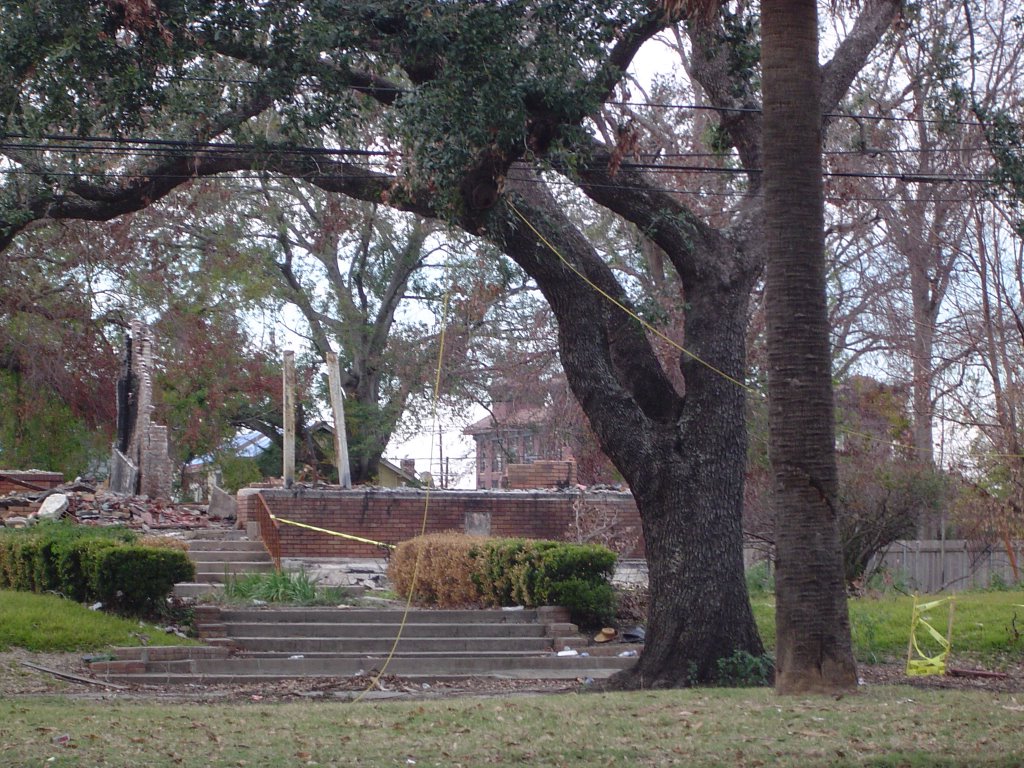
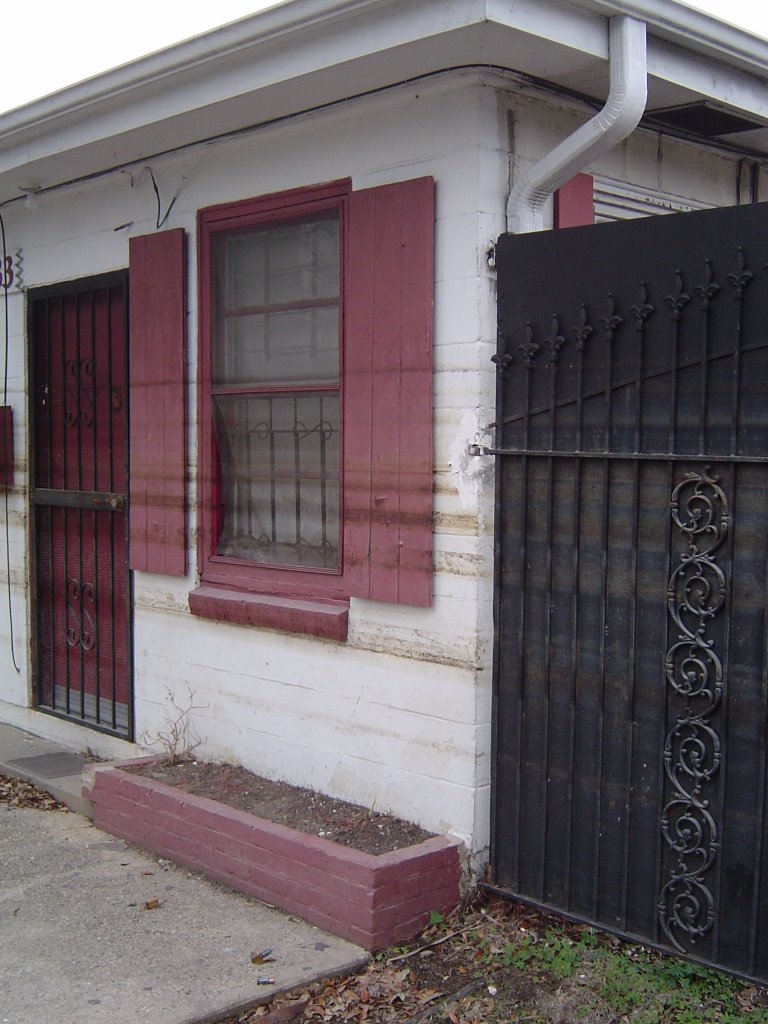
But most of the city on lower ground know nothing of randomness. The rising waters treated everyone alike, whether they lived in the poverty-drenched. predominantly African-American sections of the Lower 9th Ward or the middle-class homes of the lakefront which are predominantly white. Each of their houses bears its scars from the encounter – watermarks left on the side of their residences showing how far the water rose in each house (see photo above). The water lines on houses and businesses along Carollton are 5-8 feet. These are the lucky ones. In many sections of the city, the water marks are 15 feet.

Hurricane Katrina was August 29. It could have been yesterday, judging by the way that most neighborhoods plundered by the floods look. They are eerily quiet. There are no signs of life, not even a stray dog wandering through the streets. There are no sounds; even the birds seem to be avoiding the area. There is mold in the air and a gray veneer on everything that is reminiscent of volcanic ash. Cars are still where they were tossed, frequently in the median strip of a street where they collided with another car and came to a crumpled stop. Other cars have their windows knocked out by the water or by the countless number of trees felled by the storm.

There are houses are off their foundations, most front doors are open or knocked in - by waters, rescuers or looters. As the water receded, most of the furniture floated to the front door, where corners of couches and chairs block the entrances. Because the salt water killed all vegetation, most yards look like the grass has been scraped off, exposing the ground beneath.

While television reports have focused on the deteriorating houses of the Lower 9th Ward, the same scenes can be found in most of New Orleans. Near Lake Pontchartrain, where the neighborhoods could pass for Parkway Village, block after block – hundreds of them – are empty and dead. Driving for two hours through the neighborhoods, it's possible to see a few thousand houses. The fact that there are 50 times more houses than this is too much for the mind to even comprehend.

That’s why visiting New Orleans is like visiting a close family member succumbing to disease. He doesn’t look like himself any longer, and his condition is so tragic that it’s hard to understand how the sun can still be shining and the streets are filled with people going on with their lives. That’s the way you feel in New Orleans. The national media have moved on and the national attention span has been met. President Bush had his photo op in early October in front of St. Louis Cathedral, and he's never returned. These days, he doesn’t even mention New Orleans, because his handlers say it only revives memories of the federal government’s bewildering ineptitude at a time of genuine national disaster.

With as many as three-fourths of New Orleanians now exiled in a diaspora unmatched in the history of the U.S., with the levee still unrepaired and with so much personal tragedy and pain, it’s unnerving to be in New Orleans and turn on the national news. Talking heads report on the topic of the hour, the latest Congressional spending plan and the trial de jour. But there is rarely a mention of New Orleans, and in this city, there is a pervasive feeling that they have been forgotten.

“Most of us are resigned to another flooding next hurricane season,” said a young professional eating lunch at Domilise’s. “No one seems to really care but us. It’s like we remind the rest of the United States of something that was embarrassing and shameful, so no one wants to think about it again. How's it possible for there to be an international campaign to save Venice, but every one acts like New Orleans isn’t worth a fight?”

Deep in a middle-class neighborhood near the lakefront, in the front yard of a 1950’s brick bungalow that once epitomized the American Dream, a family in a pick-up truck backs a FEMA trailer onto the front yard of a shell that was once their home. (It’s called a trailer, but actually it's more like a camper – about 300 square feet for the family of four.)

They’re not sure they will ever live in this house again. It’s hard to look at it and imagine that they will, but for Christmas at least, they’ll be “home,” and that’s all that seems to matter. “We were staying with a bunch of other people in trailers,” explains a 47-year-old trucking company employee wearing a shirt that says his name is Dave. “All of a sudden, we knew we just had to be here for Christmas. So that's eactly what we did. We don’t know where we’ll be by next Christmas, but at least for this one, we’ll be at home.”


Next: Citizen Activism Born From Disaster

Monday, December 19, 2005

Trends Call For Long-Term Tax Solutions

The more that you scratch the surface, the clearer it seems that an adequate facilities tax or impact fee is not the answer to Shelby County Government’s financial woes.

The real answer seems to lie in a tax proposal that works within today’s realities.

A few trends to consider:

• Shelby County continues to lose income to neighboring counties -- $238.2 million in just two years (2001-2002).

• The number of people working in Shelby County, but living in neighboring counties continues to swell – now more than 88,000.

• A bulge in the 5-13 year-old portion of county population is the largest in 20 years, an early warning that more money will be needed in the future for schools.

• The Shelby County poverty rate hangs at about 16 percent, the highest of our “peer cities.”

• The total wages for jobs paid to people who work in Shelby County continue to grow at more than 3 percent a year – now $20.1 billion.

These facts seem to indicate that the energy and political capital needed to pass development taxes could be better spent on a long-term structural change in taxes. Put simply, with more people and income moving to neighboring counties, until local government devises a way to attach that income, development taxes are only putting off the inevitable.

Shelby County Mayor A C Wharton knows the results of short-sighted, political decision-making. The current budget mess is not of his making, but no-tax pledges in the past and bond payment schedules that deliberately shoved massive payments into the Wharton Administration make it his to solve.

Based on the budget mess dumped in their laps, current county officials should understand the challenge of making decisions that stand the test of time. The best course of action would be to take the time to carefully analyze the trends that are defining Shelby County’s future and set tax policies within that realistic framework.

At a time when both Memphis and Shelby County Governments have a historical overdependence on property owners for taxes, the current proposals for development taxes return yet again to property as the source for new revenues.

More importantly to the need for long-range answers, however, is the stark reality of the bond payments inherited by current county officials. Within months, the yearly bond payments for the county’s suffocating debt will reach an unimaginable $200 million a year. The proposed development fees would produce about $10-15 million.

That’s why even if the development fees were passed, county government will have to consider another tax increase next year to pay the bill that’s come due on its bond debt. In one of the most cynical examples of political gamesmanship in local politics, the Rout Administration found it hard to say no to any capital project during its eight years in office but found it impossible to say yes to paying for it on its own watch. Instead, as the county debt climbed, the Rout Administration made token payments on it while deciding to shove out the higher payments so the next administration would have to handle the political downside of dealing with it.

In the end, the size of the debt and the payments for them demand a change in our tax structure. Rather than adding new taxes onto an existing, highly regressive structure, we need ways to enlarge the pool of people paying taxes. Nothing demonstrates the wisdom of this approach as much as these facts: about 60 percent of Fayette County workers, 52 percent of Tipton County workers, 34 percent of Marshall County workers, 33 percent of Crittenden County workers and 21 percent of Tate County workers earn their livings at jobs in Shelby County.

In other words, about 62,000 people from counties in the Memphis MSA drive across the Shelby County line to work. But, add to that the 26,000 workers who drive in from counties which aren’t in our MSA, and it creates a pool of potential taxpayers of 88,000, and serious solutions to Shelby County’s tax problems should be aimed at them.

This means that roughly one in every five workers holding jobs in Shelby County don’t live here, benefiting from employment opportunities here, enjoying the amenities here and driving back across the county line to live. A number of counties across the U.S. have developed regional tax-sharing programs in support of cultural and arts attractions or for economic development, but the presence of two state lines make the prospects of such innovations highly unlikely here, because such revenue-sharing plans would require legislative action by three different states.

A payroll tax achieves the same results, but without approval by Mississippi and Arkansas. In the past, city government, notably former Council Member Janet Hooks, was a dependable advocate for the payroll tax, and these days, County Commissioner John Willingham is a relentless crusader for it. They receive supportive words from some elected officials, who do it quietly and behind the scenes (normally, way behind the scenes).

Perhaps, faced with a dramatic budgetary crisis that resists any simple solutions, elected officials can join hands to take a comprehensive look at structural tax reform that would reduce the overall tax burden on county taxpayers. In the end, however, it's hard to identify a tax option that offers the benefits of a payroll tax, chief among them, in addressing the most pressing problem facing our community – the financial disincentive to live here.

With a payroll tax, according to the only proposal on the table, Shelby County could reduce its property tax rate; it could eliminate the local option of the sales tax, leaving only the state portion of 7 percent; it could eliminate the much-hated wheel tax, and it could still generate enough revenues to make significant payments on the county bonded indebtedness.

We live in a tax adverse society, but in the end, there will always be taxes. The charge for our elected officials is to make sure that taxes are fairer, more coherent and more balanced. That’s the first conversation that county elected officials should have, and after it, they should announce what tax proposal they are pursuing.

Friday, December 16, 2005

Signs Of The Times, Hopefully


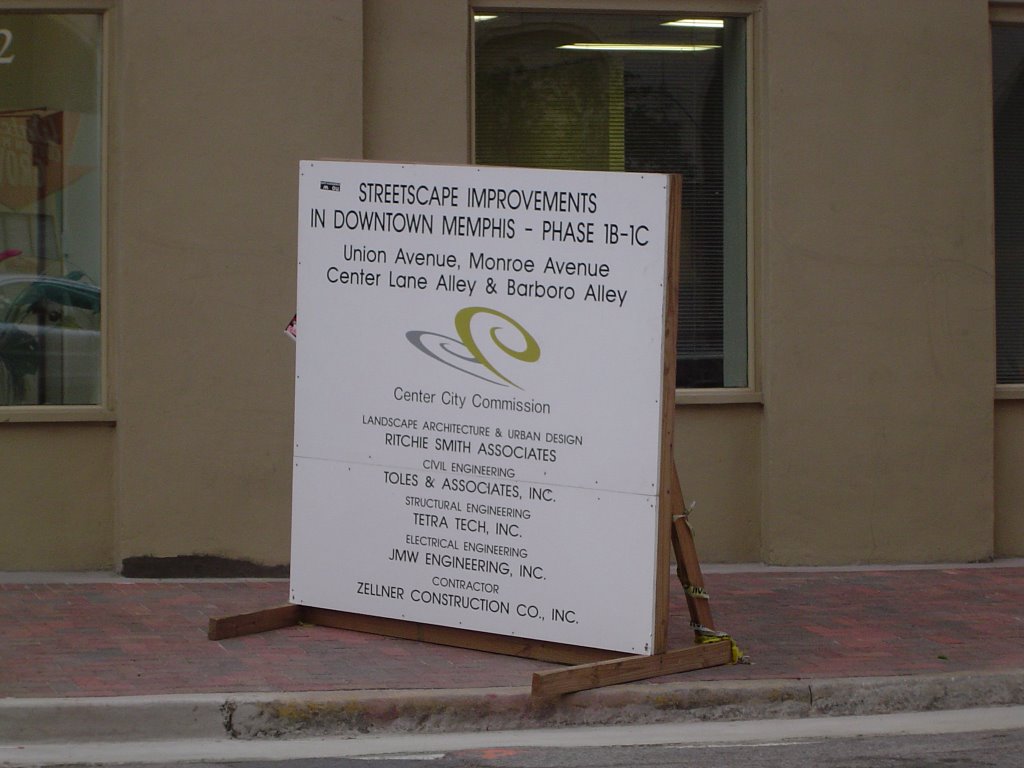
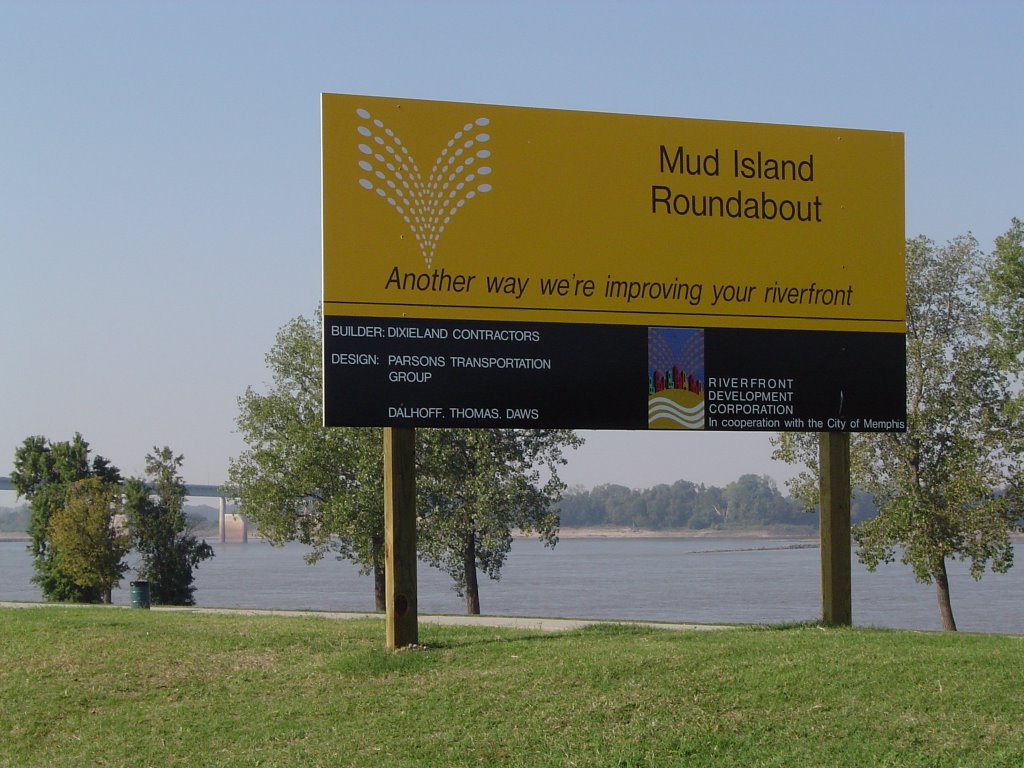
You’ll never find this in the annual reports of the Center City Commission or the Riverfront Development Corporation, but in our book, one of their most noteworthy achievements is their construction signs.

They’re the first signs we’ve seen in Memphis and Shelby County without the list of elected officials’ names that are as expected as cost overruns.

While the Center City Commission’s $4 million, long overdue sidewalk improvement project under way downtown is exciting enough, the sign for it – without the list of appointed and elected officials – is an absolute breakthrough.

(Of course, we’ve always wondered why responsibility for these sidewalks is the responsibility of the Center City Commission. It seems that the cost for them should have been included in the budget of city government, since people from all over the community will use them. But that’s a subject for another day.)

The signs of the RDC follow a similar pattern, and in fact, the agency may have pioneered these list-less signs. Today, the signs of both the Center City Commission and the Riverfront Development Corporation only list engineers, architects, etc., but no public officials

So many good things about this community start downtown, so here’s hoping the change in signs becomes a trend.

Posting their names on construction signs is a mixed blessing for elected officials anyway. There are signs posted in urban parks and along suburban roads that are obvious favorites for target practice, reminding everyone who passes what some constituents think about their elected officials.

Years ago, an exasperated county mayor wondered why he was receiving a flurry of telephone calls every day complaining about traffic snarls on Walnut Grove Road through Shelby Farms Park. A committee was formed (of course) to address the issue, particularly to determine if this was an organized effort and who was behind it. One of the first tasks was for the members of the committee to drive down Walnut Grove Road from Germantown Road to I-240. The cause wasn't hard to find. The mayor’s name was listed on 12 different signs as motorists inched their way through the bottleneck, and since he was top of mind, he also was top of the speed dial. Within days, the number of signs bearing his name was reduced to three.

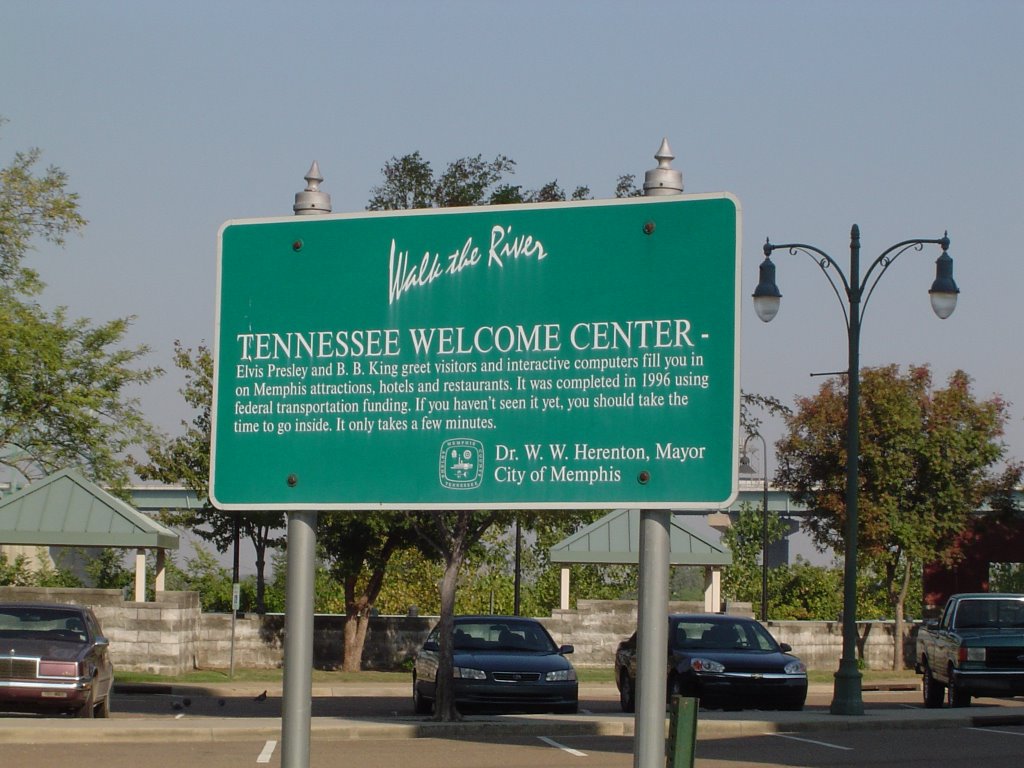
The classic example of elected officials' affinity for putting their names on all things public is found at Shelby Farms Park. There, for more than a decade, proud county mayors have had their names in joint billing with buffaloes (see above). Close behind are the series of River Walk signs that inform people about the riverbluffs, and each bears the name of the city mayor, as if these are his musings.

A former city mayor had the brainstorm of posting neighborhood watch signs all over Memphis to warn criminals that they were under surveillance. Coincidentally, each of them would also bear his name. When the next mayor took office, he wisely didn’t bother getting his name put on each of the hundreds of signs, but simply had the former mayor’s name painted out.

Does a mayor really get votes because he’s posted his name in a park, on a welcome sign at the airport or in a public building? Based on the importance attached to sprinkling these names all over the community, it must chart the course of entire political careers.

While this attachment of one’s name is at times perplexing, most of all, it’s expensive. Before government signs, like those connected with neighborhood watch, are nailed to telephone poles all over Memphis, there ought to be a "fiscal note" calculated by the government agency, informing the public of the cost of changing all the names once a mayor leaves office.

There are encouraging signs (no pun intended) emerging in other cities. A few have actually passed policies forbidding the listing of elected officials on public signs of any kind. Then a few, notably Austin, always quirky and fun, use their road construction signs to deliver humorous messages that are guaranteed to bring a smile to motorists backed up in traffic.

As for us, we favor the simplest sign of all. No names of elected officials. No engineers’ names. Just the name of the project, its cost, and the most appropriate and accurate statement of all: Paid for by the citizens of Memphis and/or Shelby County.

Thursday, December 15, 2005

The Bartlett Christmas Drama Fits Into A National Context

The controversy about the nativity display at the Bartlett Library is beginning to look as orchestrated as “The Singing Christmas Tree.” More and more, it appears to be a three-act play co-written by Broadmoor Baptist Church and the Alliance Defense Fund.

Here’s the synopsis:

Act 1, November 29. Joseph, Mary and Joseph are denied a place in the library, and the next day, Broodmoor Baptist Church has a “special called business meeting” where it votes unanimously to fight for the rights of the Holy Family.

Act 2, a couple of days later. The Alliance Defense Fund enters stage right, extreme right. It’s the legal machine that works to protect the U.S. from abortionists, secular humanists, gays, Norman Lear, well, you get the idea. By December 5, Nathan W. Kellum, the ADF’s Memphis lawyer, blisters the Memphis Library and Information Center with a letter about the unlawful discrimination carried out against the Baby Jesus.

Act 3, December 8. A parade of children from Broadmoor Baptist engage in a photo op for an assemblage of media photographers, placing Jesus in the manger over and over, and soon thereafter, the photograph in The Commercial Appeal is posted to the church’s home page, and ADF crows on its website about its victory in Bartlett.

It is a sadly demeaning episode for many Christians who wince when our faith is manipulated for the political purposes of an extremist few. Where do we go for legal relief from being associated as Christians with the type of media circuses that are common with the Alliance Defense Fund’s version of American freedoms writ anew?

If you want just a hint of its purpose, visit the ADF bookstore, with its series of books bearing covers of Christians with their mouths taped shut. The titles certainly seem factual and unbiased: "The Truth About Separation of Church and State"; "The Truth About Faith in the Workplace"; "The Truth Will Set Us Free, But Only If We Can Share It"; "The Truth About Same-Sex 'Marriage'"; "The Homosexual Agenda: Exposing the Principal Threat to Religious Freedom Today"; "International Law: American Sovereignty Under Attack"; and more.

The first time I heard of the ADF, I was listening to an NPR report about this increasingly influential organization of “Christian lawyers.” Days before, USA Today had written about “Christian opposition” to some government policy, CBS News had featured a “Christian spokesman” commenting on some recent event and someone on radio was identified as a “Christian singer.” It’s enough to file a complaint for violation of truth in advertising.

These people did not represent the array of denominations that make up the mosaic of the Christian faith. Rather, they represent a small fringe of Christianity where comfort is found in setting up mini-dramas where they can claim to be victimized. Their real complaint: they want their brand of Christianity to fill public buildings and the public square.

In pursuing this crusade, the Alliance Defense Fund – which claims to be a religiously-based organization – fights against alleged moves to “eliminate Christian and historic faith symbols from government documents, buildings, and monuments” and to remove the religious speech protected by the First Amendment. In Memphis, the ADF lawyer argued that removal of the nativity scene violated the right to free speech and religious freedom. It’s a disingenuous argument at best, but it was enough to stampede Bartlett city officials into calling Broadmoor Baptist Church and promise to allow the religious display in the library.

“It is blatantly unconstitutional for the government to single out speech from a church for discrimination simply because it is religious,” said Mr. Kellum in his letter to library officials. Of course, putting up a poster about an event at the church is a far cry from insisting on a clearly religious display, but these are lawyers who are adept at forcing a camel through the eye of a legal needle.

Our legal advice to the library: it should feel properly chastised for its lapse of Constitutional behavior, and it now should mail letters to every house of worship in the community – church, cathedral, synagogue, mosque or temple – and invite them to set up nativity scenes, Chanukah menorahs, Islamic symbols and Hindu lingodbhavamurthy.

Let’s just turn our public buildings into a religious flea market. If you think the controversy was heated this year, you haven’t seen anything yet. That’s because in the end, this isn’t about the free expression of religion; it’s about injecting the Christianity of the Religious Right into all facets of American culture, whether it is welcomed or not by the rest of us or not or whether it undermines the basic precepts of our country or not.

In the coming months, look for more of these three-act morality plays to be concocted around the U.S. As the Alliance Defense Fund maintains, there is a war on Christianity in the U.S. and that’s why it was created for its “unique, and we believe, God-given, purpose.”

Meanwhile, back at Broadmoor Baptist Church, they are content with winning this skirmish, and along the way, with being featured on Bill O’Reilly, Washington Times, the Alliance Defense Fund website and seemingly endless coverage by local media.

Here’s a prediction: the culture war in Godless Bartlett was just a training ground for Broadmoor Baptist Church and ADF. Next, they will think of ways to take on the Memphis library system, whose policy wisely precludes displays that promote a specific religion, endorse a political candidate or sell a product or service. These are the kinds of common sense rules that make all of us welcome in a building that the public is paying for.

Maybe next time around, the rest of us Christians should do something unusual. Because the vast majority of us are troubled by our religion being used to divide our people and marginalize certain groups for political gain, it’s time for us to speak out. Until we do, the actions of a few will continue to misrepresent what Christianity is really all about.

Wednesday, December 14, 2005

Dead Man Walking (And Voting)

On the surface, it looks like a battle between Ophelia Ford and Terry Roland. In truth, it’s a battle about the credibility of the Shelby County Election Commission.

The Senate hearing on the complaint filed by Roland is the sort of dispute that the rest of Tennessee loves. It reinforces all the preconceived notions about politics here and the sense that Boss Crump never quite died (at least he’s not still voting).

Already, information has been produced about a dead man who managed to get to the polls, several felons who voted although their rights hadn’t been restored, a number of people who voted after moving out of the district and more. While the dispute cries out for a grown-up to take charge and do what’s needed to get a fair election, it most of all cries out for the Election Commission to explain how such blatant violations take place on its watch.

Actually, it’s probably hard for the members of the Election Commission to grasp the full impact of these revelations on its public reputation. After all, they are plugged deeply into the political scene and engage in a variety of “inside baseball” that few of us understand. For people who are such insiders, it’s often hard to see that something is broken; the tendency is to deny mistakes and defend the status quo.

Hopefully, the Election Commission will take some time and get out into the community and research the damage that has been done to its already faltering image. The cumulative effect of years and years of allegations, of ballot boxes that materialize at the last minute and of widespread knowledge that the dearly departed have been casting ballots for years is taking its toll on the Election Commission’s reputation (not to mention the curious silence of local prosecutors when these violations come to light).

This time, it’s not likely that the storm clouds will quietly vanish into the horizon. This time, there is a losing candidate with an infinite capacity to pursue this issue and in addition, there are some influential African-American ministers in the district who, tired of the Ford machine or at least this particular version of it, actually gave Roland unprecedented pulpit time in their churches in the heart of Democratic Party strongholds and who now argue for a system that actively protects the integrity of the ballot.

In other words, the times call for the Election Commission to drive a stake into the ground and take firm actions to reassure the public of the fairness of local elections, and this should begin with the decisions to buy 1,500 new voting machines that have paper trails and a technological backup.

Already, rumors abound. The Election Commission, already bruised from the humiliating facts of the Ford-Roland campaign, is under suspicion, and if it stops short of getting the most technologically advanced voting machines, the ones that ensure the greatest possible accountability, look for a large segment of the public to howl as never before.

In a few days, the decision on the voting machines will be made. It’s a test the Election Commission can’t afford to fail.
_________________________________________________________

To understand the dimensions of this issue, we reprint a blog from November 2 about the voting machine decision that the Election Commission will make in a matter of days:

Soon, the Shelby County Election Commission will decide what kind of voting machines it will buy to replace the geriatric Shouptronic machines that have been used here for two decades.

The Election Commission needs about 1,500 new machines. The financial cost will be millions of dollars. The cost of the wrong decision is incalculable, resulting in a lack of voter confidence that undermines the integrity of election results.

At issue is whether the Shelby County Election Commission officials will opt for voting machines with the safeguard of a paper back-up. In this age of computer wizardry, there is the prevailing feeling by many that such a fail-safe system of accountability is unnecessary.

It seems like a good time for county election commission members to read a recently released General Accounting Office (GAO) which found “significant concerns” about security, access, and hardware, as well as weak security management practices by voting machine vendors.

The report identified specific problems that included:

• Problems with security

• Problems in access controls

• Problems with the machine controls

• Weak security practices by machine vendors

In addition, the GAO cited multiple examples of failures in actual elections that resulted in undervoting, the display of the wrong ballots and lost votes.

“Security experts and some election officials have expressed concern that tests currently performed by independent testing authorities and state and local election officials do not adequately assess electronic voting system security and reliability,” the report said. “These concerns are amplified by what some perceive as a lack of transparency in the testing process.”

While electronic voting holds promise, according to the report, the survey found some voting systems did not encrypt cast ballots or system audit logs, and it was possible to alter both without being detected; it was possible to alter the files that determine how a ballot looks and works so that the votes for one candidate could be recorded for a different candidate, and vendors installed uncertified versions of voting system software at the local level.

In the U.S. today, the majority of elections use one of two types of electronic voting systems: optical scan systems and direct recording electronic (DRE) systems. Optical scan systems use electronic technology to tabulate paper ballots (about 35 percent of registered voters cast ballots on these machines in the 20004 election). An optical scan system is made up of computer-readable paper ballots, appropriate marking devices, privacy booths and a computerized tabulation device. The ballots are tabulated by optical-mark-recognition equipment which senses the marks on the ballots.

The DRE’s capture votes electronically without the use of paper ballots (about 29 percent of voters used this technology in the 2004 elections). DREs have two primary models – push button or touch screen. Touch screen is the newest model, and with it, all information is presented on a single full-face ballot. Some systems tally votes with a removable storage media taken from the machine to a central location to be recorded. Others can be configured to electronically transmit the vote totals from the polling place to a central location.

It seems probable that the Shelby County Election Commission will vote to purchase the DRE machines with touch-screen technology. A word of warning: the GAO reported security flaws in some DRE systems, such as one model that failed to password-protect the supervisor functions; the same PIN programmed into all supervisor cards nationwide; unsecured smart and memory cards that allowed voters to cast multiple ballots; one model allowed its locks to be easily picked; and various lapses in security.

The problems paint a powerful case for buying machines with a “voter-verified paper audit trail.” While many DRE voting machines claim to have an “audit” function, it leaves much to be desired, because it is actually just the results from the voting machine’s computer, and the record can’t tell you whether votes have been tampered with.

The voter-verified paper audit trail has been endorsed by the national commission on election reform, and in light of the persistent reports and rumors about election fraud in Memphis and Shelby County, it would seem to be an investment in voter confidence that could not be more timely.

Already, 10 states require voter-verified paper audit trails for new voting machines on the basis that it is the only way to ensure that each vote is counted.

The last time the Shelby County Election Commission bought voting machines, they lasted for 20 years. And that’s precisely why this is a decision that the Election Commission has to get right.

Tuesday, December 13, 2005

Riverfront Blog Posts Evoke Thoughtful Reply

We receive regular responses to our blog posts from a reader who always contributes to the quality of the discussion, as proven by this post to the commentary about the riverfront. We pull it from its buried position to give it the attention it deserves:

Ahhh, yes, a suburban downtown - that’s a goal worth shooting for. Our city could join the ranks of great urban areas such as Plano, Los Colinas, Tyson’s Corner, The Woodlands, Buckhead, Costa Mesa, and White Plains.

Interesting in that a conversation with reps. for the anti-RDC group Friends for Our Riverfront” gave several compelling arguments to support their case. One individual (a real estate sales rep.) cited her son renting an apartment along Front St. and noted that no one would live downtown if they did not have a view of the river (did someone say special interest?.

Foolish me, I thought people might want to live downtown because of the urban lifestyle it offered. Walking to work, local shopping, interaction with the community on a much more intimate level and such. I was also informed that parks needed to be created so that employees inside the Morgan Keegan Tower and Falls Building could enjoy their 30 min lunch breaks during the afternoon. Apparently Confederate Park and Court Square don’t count. (See personal advice given to me by one of the reps. at bottom of page.)

Did you know that there is no reason we shouldn’t have a national forest preserve downtown? According to a representative for the FFOR, there is real resentment toward the fact that downtown residents must drive all the way to Overton Park in order to enjoy a regional park. While the representatives were quick to criticize the RDC’s financing plan, they had not undertaken any serious study identifying their proposal’s costs or the willingness of the community to support the proposal. It’s also amazing how depictions of the RDC’s proposals differ wildly from the RDC website to those that the FFOR had drawn up.

Both groups seem to be telling only half-truths. However, the RDC has actually shown results with their maintenance program for the areas under their control and thus I am more willing to support their actions. If nothing else, the FFOR needs to at least attempt to be professional in this matter as opposed to the knee-jerk reaction they have displayed to date.

My real issue with the land bridge comes from the concern that locals think they can just pick and chose ideas from a plan and still expect the results to be the same. These master plans rely on all of their individual parts to be completed to realize true success.

Once again, Memphis is showing its true roots- that of an overgrown agri-town. As long as the local population continues to hold any degree of density as such a negative quality, we will not see Memphis develop as a great urban center. I could just take the advice of one of the local reps I talked to at the Cooper Young festival, “If you want to live in a real urban center, you need to move from Memphis”. Very telling about FFOR’s intentions for “our” riverfront.

Monday, December 12, 2005

Studies Offer Reality Check On Memphis' Urban Core

If Memphis is anything, it is ever a tale of two cities, as we were reminded from three recent studies on the core city.

The reports – one by the Brookings Institution and the other two by the U. S. Economic Development Administration – indicate that our enthusiasm over the progress in downtown shouldn’t obscure our attention to some nagging challenges and problematic indicators.

The Brookings Institution research, “Who Lives Downtown,” suggests that downtown is moving in the right direction. It states that while downtown’s population increased 6.4 percent from 1990 to 2000, in the 30-year period from 1970 to 2000, its population dropped 10.1 percent to 6,832 people.

The bulk of the drop took place in the decade from 1970 to 1980 when 36 percent of downtown Memphis’ residents left, the study says.

The study of 45 downtowns states that certain segments of the population see downtown living as an engaging alternative to suburban living, but it tempers the frequently overblown rhetoric of downtown development officials with a reality check – downtowns had a net gain of about 35,000 housing units, about an 8 percent increase, compared to an increase of 13 million housing units in the suburbs, a 99.7 percent increase.

Still, there is good news. Downtown Memphis is becoming a magnet for highly coveted 25-34 year-olds (See Thursday’s blog on the seminal research by CEOs for Cities about the importance of this group to cities’ economic development). In fact, in this age group, Memphis is fifth with 28.8 percent of its residents 25-34 years-old, behind only Albuquerque, Dallas, Philadelphia and Boston. Impressively, our downtown is in a dead heat in the percentage of 25-34 year-olds with Chicago, Norfolk and Midtown Manhattan.

To add to the good news, Memphis is 10th in the percentage of downtown residents with college degrees – 41.8 percent. Midtown Manhattan, Chicago, Philadelphia and Boston lead this category far and away, outracing other cities with more than 64 percent of their residents with degrees.

Downtown Memphis is ranked 6th in the highest share of families without children – 21.7 percent (behind Lower Manhattan, Miami, Norfolk, San Antonio and Chicago). The study also pointed out that Memphis has seen a surge in the proportion of white residents living downtown, but while making this comment, the study said that 50.4 percent of downtown residents are African-American. Meanwhile, Memphis is among the bottom eight cities in the percentage of Hispanics living downtown with only 1.7 percent.

A study of incomes concluded that the median income for downtown’s lowest census tract is $7,446, while the highest census tract’s median income is $51,786. The study states that “downtowns are home to some of the most and least affluent households of their cities and regions,” and Memphis conforms to that tale of two cities.

In categorizing the typology of each of the cities, Memphis was included in the “emerging downtowns” list with some big names - Atlanta, Charlotte, Cleveland, Denver, Los Angeles, Portland, San Diego, San Francisco and Seattle. Downtowns in this category, according to Brookings, are smaller (averaging 8,500 households) and far less dense than “fully developed downtowns.”

Released at about the same time was a report on the “State of Inner City Economies” by Michael E. Porter of the Initiative for a Competitive Inner City (ICIC), who regularly offers fascinating glimpses into trends of the urban core.

In a study of 82 cities, Memphis was in the bottom rungs in jobs growth in the inner city. In fact, our city lost jobs -- about 1 percent from 1995 to 2003 while jobs in the MSA grew by slightly more than 2 percent. In addition, the average inner city wage for the 100 largest cities was $39,256, and Memphis was about 10 percent less.

This research was complemented by another research project by ICIC for the U.S. Economic Development Administration, this one on small businesses in the inner city. In a survey of 83 largest cities, Memphis was # 71 for net jobs growth for small businesses with fewer than 20 employees. In fact, from 1995-2002, Memphis didn’t have jobs growth at all, losing 2,468 jobs in inner city small businesses with fewer than 20 employees, or 1.5 percent.

The ranking for businesses with fewer than 500 employees was even worse. This is a category that nationally includes 99.6 percent of companies in the inner city. Here, Memphis finished at # 78, losing 13,874 jobs, or 2 percent. Only five cities did worse.

When all of these statistics are combined, it underscores the importance of the Hope VI projects at Uptown and Lamar Terrace and the biomedical research park. Without them, Memphis runs the risk of creating a Disney-fied downtown surrounded by crumbling inner city neighborhoods.

In the end, the future of Memphis will not be determined by how many new residents move downtown or if downtown can be successfully reinvented on a foundation of entertainment and residential living. The future of Memphis will only be secure when we invest in innovative strategies for inner city prosperity that are as determined and widely supported as those downtown.

Saturday, December 10, 2005

Riverfront Redux

In response to Thursday's posting of Carol Coletta's letter about the riverfront, we received a complaint from a regular reader. We publish his comment here, followed by Carol's reply:

LibertyLarry said...

The RDC's Riverfront Masterplan is an integrated plan to line the pockets of a few special interests loyal to King Willie.

1. The riverfront is already a signature gathering place. Memphis in May is just one example of this. It doesn't need the RDC's plan to become what it already is.

2. I believe we already have riverfront unrivaled in the nation. It can and should be improved, not destroyed. The RDC's plan would have taken us backwards and given us a subpar riverfront more like any other average city with concrete canyons rather than a public promenade with open sky.

3. The RDC's plan to finance building the skyscrappers and the Land Bridge have always been suspect to say the least. In reality, it's another boondoggle to drain city funds.

4. Pedestrian access is good ... even to Mud Island (there is a walkway above the monorail). It could be better with pedestrian walkways over the streets along the River Walk. The RDC's plan would have put a sub-division at the end of Mud Island that, along with the accompanying traffic, would have lesson pedestrian access, not increased it. Besides, without the Mud Island Park, why would anyone want to walk over there?

If Ms Coletta's letter is the best they can do a reason to justify their existence, then it is time to do away with the RDC altogther.


Carol said...

Who are these so-called “special interests” you speak of? If you know them, please name them. (A disclaimer: I could be considered one of those special interests, I suppose. I’ve owned 41 Union Ave. for 30 years.)

We have a magnificent river with one of the world’s great views across to the rural landscape of Arkansas. But the riverfront is another matter.

Thanks to investments by the City during Mayor Herenton’s Administration, we do have a bluff walk, and with leadership and persistence by the RDC, the bluff walk has been extended to the south and north.

But Tom Lee Park (not the view) is a very poor excuse for a gathering place. (You call a gathering place for the public something that costs $20 to enter, is severely damaged for months afterwards, and provides no shade or refreshments at any other time of the year? My, your standards are low.) And look at the way the bluff walk connects back to the city, particularly between Beale and Union. It is an abomination.

This nostalgia for the fire station, parking garages, and library along Front Street is laughable. I’ve looked out my window for 30 years at this landscape, and I promise you, it is nothing to be nostalgic about. It is a collection of buildings put there because the land was “free.” But the opportunity cost was incalculable. The result is a rag tag collection of buildings with no relationship to one another, no orientation to the riverfront and no practical public access. Why you resist the proposed Promenade is beyond me.

Your use of “concrete canyons” is perjorative. Let’s break it down. What do you propose instead: single family homes to make downtown like the suburbs. In fact, the subtext of much of the opposition to the master plan has been the opposition to density. But if you want a vibrant urban core that can support “live, work, play, shop” options like any real downtown, you must have density. You have to have people — and a lot of them.

The master plan was carefully crafted not only to improve public access and enjoyment of our river but also to pay for the improvements. The opposition has never — NEVER — proposed any realistic or reasonable plan to pay for any of their proposals. They are more pipe dreams of some bucolic open space better suited to the suburbs than to the city.

Finally, any one who uses the riverfront with any regularity knows the enormous difference the RDC has made in its upkeep and maintenance.

Another third rate park is not what downtown Memphis needs. (Check the use of Jeff Davis and Confederate Parks, then tell me how “attractive” they are.) The only way we are going to get first-rate public space along the riverfront is to figure out a way to pay for it with private development.

The current model for urban parks worldwide is Millennium Park in Chicago. It has set a new standard for great public space. It has an intensive set of uses that activate it year-round.

Arguing that we should simply settle for what we have takes a very small view of what Memphis can be. Let's not fall back to our very familiar position of selling ourselves short while we have the chance to transform the riverfront into a spectacular public space that enlivens and enriches our city.

Friday, December 09, 2005

Manufactured Christmas Controversies Undermind The Spirit Of The Season


Did you ever notice how quickly those of us who are in the majority – this time, I’m thinking Christian – can advise the minority to quit being so sensitive and to be more tolerant about our religious intrusions into their lives?

It’s reminiscent of years ago when the Saul Alinsky-inspired neighborhood movement put down its roots in Memphis on the eve of the Memphis population becoming majority African-American.

There was a panel at Rhodes College to talk about the changes that were inevitable in Memphis’ future. The Alinsky advocate on the panel described a city where black concerns would be paramount, the civic agenda would be drastically changed, the political power would shift to the poor and disenfranchised and the people who had been ignored in civic strategies would now be in charge. It was a stark description of the political realities that he saw in Memphis’ future.

One Caucasian city official on the panel responded with this comment: “It just wouldn’t be right for black politicians to ignore the concerns of the white community. Black elected officials need to reach out to whites, they need to create a balanced agenda that recognizes the concerns of white citizens and they need to govern with compassion and unity.”

The response was swift: “Who do you think we learned politics from? The white community.”

It was a telling reminder that it is often hard for those of us in the majority to exhibit the very qualities that we are urging on others. The best example of this paradox in this special time of peace, love and brotherhood is the manufactured battle over Christmas trees, Christmas greetings and nativity scenes.

It was bad enough that far right Congressmen dreamt up this controversy, so they could cast a vote to "defend" Christianity, but it’s even worse that the news media are willing co-conspirators, whipping up viewers’ emotions with the notion that the most Christian nation in the history of the world is under siege and in danger of being overrun by secular humanists.

Watching television news each night, Memphians are left with the impression that we are witnessing American civilization on the slippery slope of destruction with the decision by a Bartlett library official that a public building is not the place for a religious exhibit.

The nightly outrage engendered by television reporters and radio talk show hosts fuels the flames of intolerance without ever asking a simple question like: How would you feel if you walked into the Bartlett library and the only religious display allowed there was Muslim? Or Buddhist?

As a Christian, I would be outraged, just as outraged as I am now by the proposition that only my religious observance should be recognized by a government whose services are funded by the taxes of Christian and atheist alike.

I’ve got a nativity scene in my home and there is one at any church I chose to attend. To listen to the nightly debate over holiday versus Christmas trees, my nativity scene must have been historically inaccurate for all these years, for apparently, Jesus Christ was born in a manger under a decorated evergreen tree.

It’s a little like those displays in some front yards where Santa Claus and his reindeers mingle with the wise men, Joseph, Mary and Jesus. Why do we care what an evergreen tree in my living room or in the nation’s Capitol is called? It has no connection to the meaning and purpose of Christmas anyway.

And yet, somehow, media hysteria has been whipped up in a context that Christmas symbols and Christianity itself are under attack. Meanwhile, commercials are filled with Christmas themes, the radio will soon be filled with Christmas songs,the television airwaves will soon be filled with Christmas specials and t.v. series feature Christmas parties and family gatherings.

So, why should the lack of Christian religious exhibits in the public square be a source of agonizing consternation?

It’s yet another trumped-up, pandering, politically-driven issue that encourages Americans to take their eyes off the ball. Rather than concentrate on the war, tax policy or gas prices, these kinds of wedge issues are fed by the most cynical political strategists who see narrow benefits in dividing Americans along religious lines. One day, the enemy is the homosexual agenda. The next day, it is the liberal media. The following day, it is Wiccans. Today, it’s Christmas trees.

And yet, despite this alleged culture war on Christianity, the vast majority of our people are Christian, the vast majority of our legislators are Christian and the vast majority of us beaten down and weary from these political ploys are, yes, Christian.
Despite the revisionist history marketed by the Religious Right, there is an historic doctrine of separation of church and state, and it was created knowingly and wisely by our nation’s founders. In fact, amazingly, there was a time in our history when the Baptist Church led the fight for it and for tolerance, because its members were so frequently the subject of persecution in early America. There was a time when Thomas Jefferson was vilified for his liberal notions of religion and his wise belief that it should be separated from government decisions.

These days, we often seem to ignore the lessons of our own history, but we also seem to ignore the lessons that are played out each day on CNN. As we watch, we shake our heads in disgust at the pain and hatred that flow from religious leaders in the Middle East who deny the validity of every other religion, who adopt their religious principles into law and who condemn anyone who disagrees with them in religious terms.

It’s not just dangerous in the Middle East. It’s just as dangerous here at home.

Those of us in the Christian faith who call for other religions to “get over it” and to quit being so sensitive so we can put our religious displays in public buildings might take a step back and embody the same values that we are so quick to urge on others.

What would Jesus do? There are many these days who profess to know, but the Jesus we know would say to quit worrying about symbols and focus on reality, making the world a better place by radiating a faith that embraces every person inclusively, tolerantly and lovingly.

For this season at least, why can't we simply show some Christian compassion and understanding, embrace our fellow men and women and actually reflect the Christmas spirit, the Golden Rule and the real message of Christ’s ministry?

Now that would be worth celebrating.

Thursday, December 08, 2005

Cities' Success Tied To Attracting Young Educated

This article from today's Chicago Sun-Times reports on research that began as part of our work at Coletta & Company (now Smart City Consulting) with economist Joe Cortright for Philadelphia, Atlanta, Portland, Richmond, Providence and Tampa. CEOs for Cities has now taken it to a national platform:

Cities that attract college educated 25- to 34-year-olds will prosper in the next decade while other urban areas will suffer, according to a study released by CEOs for Cities, a national non-partisan organization of mayors, corporate CEOs, university presidents, foundation officials and civic leaders.

The report, "The Young and Restless in a Knowledge Economy" and written by Oregon-based economist Joseph Cortright, uncovers a number of emerging trends that suggest an urgent need for cities to focus their efforts on attracting and retaining college-educated 25- to 34-year-olds.

"This is a watershed moment for cities and city leaders," Cortright said. "Just as railroads and interstate highways shaped development in the past, the migration of knowledge workers will shape prosperity in the future. Cities that disregard this basic fact do so at their peril."

The report forecasts several impending factors that require a shift in urban economic development to avoid a labor shortage and meet the increased competition for human capital in the near future:

*The retiring baby boomer generation.

*Plateaus in college attainment levels.

*The leveling number of women entering the work force.

According to Cortright and CEOs for Cities, college-educated workers 25 to 34 years old are in a unique position to meet these challenges because they are the most entrepreneurial.

They also are the most mobile. Data show that 39 percent of people with a college degree will move across state lines compared to just 19 percent of high school graduates.

Additionally, 45 percent of those with advanced degrees will move across state lines. These numbers drop precipitously as people age.

"The U.S. is on the verge of a seismic shift in labor markets, and fault lines will emerge to threaten a city's economic future unless it succeeds in understanding and attracting the young, college-educated workers who propel today's knowledge-based economy," Cortright writes.

Cities with the most attractive close-in neighborhoods will fare better in attracting the "Young and Restless."

Young adults tend to be disproportionately located in the center of metro areas, and this pattern will continue to intensify. According to the report, the cities currently with the most attractive close-in neighborhoods include Chicago, Seattle, San Francisco, New York and Boston.

Another key to future urban success will be the ability to attract young, educated women, because they are now -- for the first time in U.S. history -- more likely to have a college degree than their male counterparts.

Today, young women are about 20 percent more likely to have a four-year degree than men. In 2004, the college attainment rate for women ages 25 to 34 was 31.4 percent compared with 26.1 percent for men.

"Increasingly, we live in a world where cities compete for people, and businesses follow," said Carol Coletta, president and CEO of CEOs for Cities.

"This trend has largely been ignored by many cities, which are still focused on business climate and tax incentives," she said. "But I think the big question businesses will ask in the years to come is going to be 'Can I hire talented people in this city?' Cities need to be able to answer 'yes' to succeed."

The Riverfront Masterplan Is An Integrated Plan To Create An Unrivaled Opportunity

The Commercial Appeal letter to the editor:

If Memphians can't make our riverfront a signature gathering place, what are we capable of doing?

Your Dec. 5 editorial, "Land bridge going nowhere," misses the fact that the riverfront master plan detailed an integrated set of key pieces, all having a purpose that serves the greater whole. Completing the master plan as Cooper Robertson proposed it would give us a riverfront unrivaled in the nation. Instead, it has been picked and parsed and seems destined to be at best a piecemeal version of the original vision. What a lost opportunity for our city.

Before it is forgotten, and just to set the record straight, no one ever proposed building the land bridge or promenade without the commensurate private development to pay for them. The plan always anticipated a long-term time frame for the market demand to develop. To assert anything else is simply wrong.

Although you call for improved "access" to the riverfront, anyone who takes a thoughtful look at the site realizes that the only way you get access is with continuous, ample pedestrian connections along the riverfront, such as those provided by Beale Landing, the promenade and, yes, the land bridge.

To reduce our ambitions for our riverfront to better maintenance and a few new "features" is to throw away transformative potential that can be realized in no other way. What a shame.

Carol Coletta

Let's Not Study The Study

Please, mayor, say it ain't so.

In the wake of the release of the most insightful, thorough report on tax incentives for business ever written, Shelby County Mayor AC Wharton calls for creation of a committee.

It's not really the mayor's fault. It's just the nature of the beast. Why implement something when you can study it for months in hopes that the momentum behind it dissipates and no political price has to be paid?

Mayor Wharton's position is that a committee of government and business leaders now needs to be created to develop an economic development plan for Memphis and Shelby County. The absence of such a plan has been the worst-kept secret in Memphis, and addressing it years ago would have prepared us to move ahead with dispatch. Instead, we appear to be flat-footed in response to the consultants' call for overhauling the city-county PILOT (payment-in-lieu-of-payments) program whose largesse is largely responsible for waiving $60 million in taxes (that's this year's total waived taxes, not the cumulative total of waived taxes over the past 18 years).

The report is so well-founded and so to the point that its implementation should begin immediately. This time, there is a sense at the legislative level that the public has had enough, and this seems to be one issue that is volatile enough that it will not fade from the collective consciousness.

In this instance, it's Memphis City Council that's showing the appropriate sense of urgency for changes in the program, with one of its committees already voting to enact the recommended changes. While Mayor Wharton (and Mayor Herenton if he agrees to his county counterpart's suggestion) may appoint a committee to study the study, the actual authority for tax freezes rests with City Council and the Shelby County Board of Commissioners, and while a mayoral study committee contemplates what to do, the legislative bodies could be busy doing it.

In other words, there is a long-standing need for a real economic development plan for our community, with an arsenal of various incentives, but there is no reason that it should slow down in making the changes in the PILOT program.

Every month that passes is just one more month that the various boards grant more tax waivers.

Wednesday, December 07, 2005

Consultants' Report on PILOT Program Calls For Overhaul


The long-anticipated study of the city-county PILOT (payment-in-lieu-of-taxes) program is finally finished and the conclusion couldn’t be more clear and unequivocal: the present system is broken and cannot be fixed.

The 97-page report (with twice that many pages as appendices) is the most unexpected ever delivered to Memphis City Council. As Council Member Tajuan Stout-Mitchell observed, it’s the first truly objective study ever received by that body. Without question, it was in fact equal parts courage and insight, and that alone makes it an unusual occurrence in the halls of government.

While the initial reaction from real estate developers was wisely to refrain from public comment, get ready, because before it’s over, there will probably be more howling than a Lon Chaney Jr. werewolf movie.

Already, some in the development community say that the mayors have promised to help them resolve some of their biggest objections, chief among them trying to prevent the transfer of tax freeze approval from the mayors to the Memphis City Council and the Shelby County Board of Commissioners.

Change is hard to accept by all of us, but for politically-connected people who have gotten everything they have wanted since the tax freeze program was created in 1987, it’s hard for developers not to look like shell-shocked recruits returning from Iraq.

After all, they led the battle in 1996 that restructured the PILOT program and increased the maximum term from 5 years to 15 years. Back then, they even helped to create the matrix that was supposed to bring rationality, sanity and fairness to the process. Then, about two years ago, they campaigned for and got an amendment to the PILOT program that actually allowed “second generation” PILOT’s for existing buildings. (City and county governments pitched the change as needed to rehabilitate older buildings within the urban core, but a check of the records shows that most of these PILOTs are on the city periphery.)

With about $60 million in taxes waived by essentially the Memphis and Shelby County Industrial Development Board and the Center City Revenue Finance Corporation, it seems clear that any checks and balances that were supposed to be in the system have evaporated.

The recommendation that the final approval for PILOT's be moved to the City Council and Board of Commissioners is being treated as the end of democracy by some, and Mayor Wharton passed on the opportunity with The Commercial Appeal to endorse the report. The most frequent criticism of the recommendation for legislative approval is that it would politicize the process, which is a bit like acting surprised that a Peter Jackson movie is full of special effects.

It is a political system. It is filled with elected officials. It is political already. The only difference is that now the political interests are the mayors, and if the report recommendation is approved, it would increase the politicians involved in the approval process from two to 28, and the naive among us hold out hopes that the number of political interests will deter the developers from playing political games, as they frequently do now, but will be forced to develop real analyses of their economic impact, the benefit to the community from its purchasing, etc.

Here's our suggestion for what should be done. The City Council and Board of Commissioners should take charge of the PILOTs for only a 9-12 month cooling off period, contingent on the mayors doing two things.

One, the mayors should gut the Industrial Development Board, removing all of the present members, some of whom have served for decades and who seem to have never met a tax freeze that they didn't like.

Second, the mayors should get serious about filling the vacant economic development director's job in city-county Office of Planning and Development. This is the chance to get someone with national credentials, someone qualified to develop a real, functioning, balanced economic development plan for the county and to execute it. This is a person who should be given autonomy to make decisions about economic development priorities and be free from political influence.

During the 9-12 months that the legislative bodies are directly controlling the process, the new economic development expert should analyze the options for the evaluative and approval process for tax freezes and should present findings and recommendations to the mayors and the local legislators for what the final restructured process should look like.

In the end, the best solution to tax freezes is to create a process known for its accountability, its transparence and its objectivity. Someone with national experience and credentials should be hired to get this done. Now.

Meanwhile, Memphis City Council yesterday, on the motion of Councilman Tom Marshall, who eloquently described the problem with tax freezes ("We have been slowly, as a council body, abdicating our responsibilities as the custodians of the city's coffers to boards which have removed accountability farther away from those who have a direct responsibility to constituents.") unanimously took the first step toward implementing all of the recommendations of the report. While some question the legisators' involvement in tax freeze policy, it is worth remembering that they, not the mayors, have the legal authority over PILOT's, and they have the power at anytime to take back the authority it delegated away 18 years ago to various boards.

As the county attorney's office opined about a decade ago, if the local legislative bodies giveth, they can also taketh away, and we believe that is precisely what they should do for a reasonable transition period. They should rescind the authority given to the various boards to waive city/county taxes and take back control.

While the city side of Main Street seems to be ready to act, the county side is less interested in quick action, or at least not until the end of February, which just happens to be after the qualifying deadline for the upcoming elections. There is the natural political tendency to put off issues that are as booby-trapped as effectively as this one is -- caught between the public whose patience for tax freezes is waning rapidly and developers whose contributions are critical to keeping the political coffers full. This kind of volatile issue is ready-made for a populist opponent who could use it this time around just like John Willingham used the FedEx Forum four years ago in his successful bid for county commission.

Regardless of whether the issue can be sidestepped for now on the county side of the street, it's clearly not a controversy that is going away. The City Council's vote yesterday was a direct reflection of the message that they are getting in their districts, where shutting down the number of tax freezes plays awfully well with their voters.

Tuesday, December 06, 2005

Smart, Smarter, Smartest

From a Financial Times interview with Tom Friedman by Andrew Hill...

"Sir John Rose of Rolls-Royce [said], "I think we're going to move from developing, developed and under-developed countries to a category of smart, smarter and smartest countries and smart, smarter and smarter communities because you can have an under-developed country with a really smart community like a Bangalore or a Chennai or a Hyderabad."

Will Memphis be smart, smarter or smartest? Or will Memphis be the reverse of Bangalore -- a not so smart community in a developed nation?

Giving The Public More, Not Less, Real Journalism

A book review from the Philadelphia Inquirer:

The Gang That Wouldn't Write Straight
Wolfe, Thompson, Didion
and the New Journalism Revolution
By Marc Weingarten

Crown. 325 pp. $25

Long-form journalism keeps taking punches to the gut.

Newspaper editors now chant a mantra of "short, short, short" to their reporters. (Hey, jerko, can you cut that to "short"?) Time and Newsweek serve up bite-sized capsules that used to be restricted to People, their down-market cousin. Nightline's devotion to one textured story vanished last week, post-Ted Koppel, into the tired old TV-mag format: three quickies.

The explanation from bosses who make these decisions? Short attention spans, especially among "young-uns." Problem is, there's no credible research to support the SAS myth. Just corporate-purchased research.

The data that exist come from people with short attention spans, the kind who participate in focus groups and telephone surveys relied on by corporate research. Guess what? SAS in, SAS out. Well-educated, successful people with good incomes and long attention spans don't waste time on focus groups or telephone marketing surveys. They're too busy reading books, serious magazines, and long-form journalism.

The Gang That Wouldn't Write Straight takes us back to an era - roughly 1965 to the late '70s - when iconoclastic American journalists resisted false inferences about modern life's impact on reading. They excited paying customers with more, deeper, wilder, sexier and smarter instead of less, thinner, tamer, primmer and dumber.

Marc Weingarten, a smooth newspaper and magazine writer, tells the tale here of the main outlets and heroes of what Tom Wolfe christened, in a 1973 anthology he coedited, "The New Journalism": Esquire, Rolling Stone, the New York Herald Tribune, New York magazine, editors such as Harold Hayes, Clay Felker and Jann Wenner, and the star writers everyone knows now, such as Wolfe, Jimmy Breslin, Hunter S. Thompson, Gay Talese, Joan Didion and Michael Herr.

Weingarten's approach appeals. While his biographies of writers and editors remain necessarily compact, they explain how New Journalists individually grasped what journalistic bosses ignore today: that more - more detail, more nerve, more reporting, more style, more voice - convinces readers they're getting more for their money, so they buy.

Weingarten starts out with the still-hilarious tale of how Wolfe, then the Herald Tribune's hot feature writer, took off in 1965 after the New Yorker in his bristly two-part piece, "Tiny Mummies! The True Story of the Ruler of 43rd Street's Land of the Walking Dead!"

William Shawn, the New Yorker's venerable longtime editor, a man with a profile so low he might have been in a "witness protection program," had declined an interview request from Wolfe and asked the aggressive young reporter to back off. "If we tell someone we want to do a profile and that person doesn't want to cooperate," Shawn explained to Wolfe, "we don't do the profile. We would expect you to extend us the same courtesy."

Instead, Wolfe extended his portrait to thousands of words, including stinging detail gathered from New Yorker insiders, about Shawn's office with its "horsehair-stuffing atmosphere of old carpeting... and happy-shabby, baked-apple gentility." Manhattan's chattering classes could talk about little else for weeks.

The impulse shared by Weingarten's New Journalist revolutionaries - he labels their convergence "the greatest literary movement since the American fiction renaissance of the 1920s" - was to begin "to think like novelists," to aim at "journalism that reads like fiction" but still "rings with the truth of reported fact."

The stories Weingarten recounts show how New Journalists implemented that strategy. Wolfe insisted on time to "hang out" with Ken Kesey and his Merry Pranksters, to gather the little things that let an interloper get a story right. The idea, Wolfe remarked, was "to do more reporting than anyone had ever done before."

Breslin's credo that "the loser is always more important than the winner" in any situation also required putting in time, visiting regular haunts of the less fortunate, having room to report the downbeat details. Norman Mailer, in an early magazine article on John F. Kennedy, demanded that his word choices, his imagery, stay.

Today a space-crunched editor might cut Mailer's throwaway line that Los Angeles looked as if built "by television sets giving orders to men." Yet such lines stick in the mind, and bring a reader back for more.

Weingarten stresses that the freedom the evolving New Journalism stars received from editors and publishers to stretch further, to report peripheries, to let loose with perspective and voice, came at a price. The cost of ambition and achievement was space.

"You have to have a mission when you're publishing," Time cofounder Henry Luce told a young Clay Felker, "otherwise you have nothing." Weingarten's back-to-the-past tour leaves one with the impression that the folks with SAS today are editors and publishers who can't remember that long-form journalism excited sophisticated readers as short-form journalism never has.

A prediction. After today's blogging hype fades for a tried-and-true historical reason - serious readers have never paid more than a pittance for ephemera - the Internet's identification with blogging will give way to exploitation of its truly novel capacity: limitless cheap space for substantive, long-form writing. That development will only expand as the last print generation that hates to read off screens dies off.

When publishers grasp that economic model - so far only Google and Yahoo see it coming - the heirs of Wolfe, Thompson and their peers will start punching back.

Nissan Helped Develop State Law To Give Company Millions

From Nashville Tennessean:

Lawmakers may have been in the dark, but Nissan North America's consultant wasn't when a new law came up for a vote last summer that would mean millions more taxpayer dollars for the car company if it moved to Tennessee.

That's because the Nissan consultant helped develop the policy while the elected representatives who were voting on it were given little or no information about how it could affect the state's coffers.

The amendment has resulted in Nissan being eligible for a $50,000 reimbursement per employee for moving expenses when Nissan relocates its North American headquarters to Williamson County next year.

Altogether, the moving-expenses law, written at the request of Mark Sweeney, Nissan's paid site-selection consultant, gives the company a $64 million bonus above what the state's standard incentives packages had been in the past.

The midsummer policy change — part of one of the richest headquarters relocation deals in recent U.S. history — has raised eyebrows around the state Capitol, where the bill whizzed through the General Assembly.

Some lawmakers who voted against the legislation in May say they still aren't sure exactly what the law does or whether it's a good policy for the state.

"I think the verdict is still out," said state Rep. Beth Harwell of Nashville, who was among 17 Republican House members who voted against the bill.

The major shift in Tennessee's policy on business incentives passed both houses of the General Assembly with virtually no discussion and with most lawmakers in the dark about which company the new rules would benefit.

The policy change took place after Sweeney told officials with the Tennessee Department of Revenue and Department of Economic and Community Development what other states were paying to attract corporate offices, and he suggested it was time to start paying companies for their moving costs.

Tennessee Economic and Community Development Commissioner Matt Kisber said Sweeney is one of several site-selection professionals he turns to for advice, and he listened when Sweeney talked about beefing up the state's headquarters incentives package. "He definitely said to us that you need to look at relocation assistance. It's got to be a part of a package like this," Kisber said.

Moving can cost a company between $50,000 and $100,000 per employee, and being able to have the state cover those costs was very important, Sweeney said when asked recently about his role in the incentives.

"That can be a very large cost and a very large deterrent to having a project move forward, even if there are compelling strategic or other reasons to do it," Sweeney said.

Until this year, the state did not give direct payments for the cost of moving a business and its employees, as other states have done.

The new law, passed about five months before the Nissan move was announced, limits the reimbursement to $50,000 per relocated job. Which costs are covered are at the discretion of the state commissioners of revenue and economic and community development.

"Tennessee has made themselves extraordinarily competitive for large relocation projects with that incentive," said Sweeney, a consultant with South Carolina-based McCallum Sweeney, one of the top site-selection companies in the nation.

While it's not unusual for a company's lobbyist to be involved in writing legislation that benefits his or her client, it's a practice that has drawn the ire of government watchdog groups for years.

"It just points out the need for full disclosure," said Ben Cunningham, a volunteer with Tennessee Tax Revolt, a group that's been involved in ethics reform efforts.

The group advocates opening the legislative process as follows: "Having this information on the Web so people can easily access it, having full disclosure so that citizens can get involved in the process, so it's not a closed loop where rich or highly paid lobbyists dominate the proceedings."

There's little or no dispute that the Nissan headquarters move will be good for the area's economy. But a handful of lawmakers who voted against the state's plan have voiced concerns about the way the law was presented and a lack of information made available by the Bredesen administration when they were asked to vote on the changes as part of a larger tax bill.

"We never had a chance to read the bill," state Rep. Susan Lynn, R-Mt. Juliet, said. "If we had read the bill prior to discussion, we still wouldn't have known who the bill was for."

The headquarters-relocation provision was tacked on as an amendment on the Senate floor shortly before it passed unanimously on May 25. The House discussion a day later on the same bill lasted less than five minutes.

Sen. Jim Kyle Jr., D-Memphis, who sponsored the bill and the amendment that changed the law, said he introduced the amendment at the request of the Department of Revenue. He didn't know who the bill would benefit and didn't ask.

"I could see what it was about," Kyle said. "I knew they were working on some things, and they thought this was a good provision. I didn't think I needed to know any more, and I didn't ask any more. I'm a team player."

The bill came before the House on May 26, at the end of a long day that started with the arrest of four lawmakers in the Operation Tennessee Waltz federal bribery sting.

A recording of the House session available on the Internet showed that the bill passed 75-17 with two present and not voting.

Overall, Nissan stands to receive more than $197 million in state and local incentives to move its headquarters from Gardena, Calif., to Franklin, including $64 million for moving costs and $80 million in job-creation tax credits.

It's one of the richest headquarters relocation incentive deals in recent times, beating Boeing Co.'s move from Seattle to Chicago in total incentives and incentives per employee.

Sweeney's firm was involved in both deals.

State officials acknowledge that the Nissan headquarters incentives package is large. But they expect the state to recover those costs quickly because the 1,275-person headquarters is projected to generate more than $526 million a year for the area's economy.

Reagan Farr, deputy commissioner for the Department of Revenue, said he wrote the bill using information that Sweeney provided, as well as input from Kisber and his staff.

Kisber said Sweeney's advice was valuable, but the policy provision, which ties reimbursement costs to other large industrial projects, came from the Department of Revenue.

"He said you've got to look at some of the revenue streams you've got and what makes sense for you in terms of how to structure it," Kisber said of Sweeney. "He definitely gave us the working parameters.

"Reagan and (Revenue Commissioner) Loren (Chumley) worked to fully develop the concept. He was not involved in the details of it. When it was drafted, he reviewed it and commented on it."

Farr and Chumley are both tax attorneys.

It is common for states to write laws for a specific economic development project. The laws are usually written in conjunction with the prospective company and are written in such a way that few companies could qualify for them, said Bill King, chief editor of Expansion Management magazine.

"A lot of these big expansions or relocations are unique," King said. "They're one of a kind — like Mercedes going into Alabama or BMW in South Carolina. It's not unusual at all that special legislation has to be drafted. This is true in every state."

The law says that for a company to be reimbursed for moving costs, it must have already spent more than $1 billion and created more than 1,000 jobs that pay 150% of the state's average industrial wage.

It must also spend at least $20 million and employ 200 or more people who make more than twice the area's average salary, or spend $50 million or more on its headquarters building.

Few companies could qualify for that benefit, and Nissan is the only one in the state that does.

Kyle said he thinks the rule is good policy.

"I would say we make money every time someone does that. I don't think it costs us any money," Kyle said. "I hope the next company that wants to do that is in Memphis, if you want to know the truth."

"Anybody that wants to invest $1 billion in infrastructure, build a $50 million headquarters and transfer their headquarters, I think the city of Memphis would give them $50,000, much less the state."

House Majority Leader Kim McMillan, D-Clarksville, who sponsored the House version, pitched the bill as a routine clarification of tax laws.

McMillan told her colleagues that it had provisions to help Tennessee's tax structure compete, as well as attract and maintain jobs. But there was no mention of a policy change or that it involved reimbursing a company's costs for a headquarters move.

McMillan said she knew the bill would help the state in its economic development efforts, but she didn't know Nissan was the beneficiary. She said she felt the law had adequate discussion before it passed.

Other lawmakers who voted against the measure didn't see it that way.

"There were unanswered questions, and I didn't like the idea of reimbursing people that much money," Rep. Joey Hensley, R-Hohenwald, said, adding that the $50,000 reimbursement seemed high to him.

"I don't mind helping them," Hensley said. "But that seemed like a lot of money for the state to be spending."

Harwell said her opposition had more to do with unanswered questions than anything else.

"No one is saying we're opposed to it," she said of the Nissan incentives. "What we are saying is, you need to have it on the board. When you're talking about the public's money, then the public has every right to know what's going on."

She said she's still not sure the policy is for the best.

"I think there's mixed blessings there," Harwell said. "Certainly, we want to expand our base here and encourage companies to come here. But I think it's a balancing act between what we are giving away."

Monday, December 05, 2005

Homebuilding In Memphis And Unincorporated Shelby County Is A Regional Bargain

While we have questioned the ultimate usefulness of the Wharton-advocated development fees in correcting the fatally flawed tax structure that plagues our community, his proposal is not the devastating attack on the homebuilding industry as some would suggest.

While the rhetoric overheats quickly whenever the homebuilding or development industries are involved, but what's regularly missing from the debate on Shelby County Mayor A C Wharton’s tax proposals in the past is a sense of context.

We’ve all heard that these new development fees would threaten the vitality of home building in Shelby County and therefore our entire economy, but ignored in the discussion is a central fact: the fees for building a house in Memphis and unincorporated Shelby County are the bargain of the region.

For example, a 2,500 square foot house costing $175,000 has fees of $592 if built in Memphis or unincorporated Shelby County.

However, if that same house is built in Arlington, Germantown or Lakeland, fees there would add up to $750. Then there’s the $881 in Southaven, $874 in Oakland and $810 in Hernando. If it were built in Collierville, there would be $1,088 in fees; in Olive Branch, fees would amount to $1,276; and in Horn Lake, $1,912.

In fact, if you’re only interested in a place with cheaper development fees than Memphis and unincorporated Shelby County, you’ll have to move to West Memphis ($242) or Covington ($355).

In case you’re thinking that it must be the subdivision developers that are taking the biggest hits here, guess again. If developers build a subdivision in Memphis, it’s $5,250 for a 50-lot subdivision with one-acre lots and 4,000 feet of roads. In unincorporated Shelby County within three miles of Memphis city limits (its so-called extraterritorial jurisdiction), the cost is $5,365, and outside the three mile limit, it is $9,500.

The tab in Arlington would be $18,150; Germantown $11,600; Lakeland, $165,150; Collierville, $22,050; and Hernando, $25,000.

It’s in subdivisions south of the state law that the development fees are an incentive - in Horn Lake, $600; Southaven, $450; Olive Branch, $3,500.

While many of our region’s cities have forms of development fees in the guise of significantly higher sewer connection fees, water connection fees, fire development fees and plans review fees (for example, Collierville charges $13,250 for subdivision inspection for a 50-lot subdivision while Memphis and Shelby County doesn’t charge anything), Mayor Wharton continues to pursue adequate facilities taxes or impact fees.

While it’s possible to argue that Mayor Wharton’s development fees are “too little too late,” it’s more to the point that they’ll produce about $10 million a year, which is way too little to produce any important changes in county taxes. In fact, it’s expected that the fees would be used to pay upcoming increases in the county’s suffocating debt service and would not reduce the existing tax rate at all.

It’s that existing tax rate that’s got to be lowered if Memphis is to become competitive within the regional framework.
Now, there is a major disincentive for anyone to live in Memphis, which has tax rates considerably higher than other municipalities in the region.
(Of course, one reason that its sister cities within Shelby County pay less is that county government has routinely subsidized public services within the smaller cities for years.)

It’s unfortunate that adequate facilities taxes and impact fees were not authorized 10 years ago, back at a time when they could have made a difference in forestalling future tax increases.

Philosophically, it’s hard to argue with the rationale for them. They are aimed at paying the cost of the new infrastructure associated with new development. However, the proposed Wharton development taxes would have to be roughly 10 times higher to get even close to paying for the new county debt associated with suburban sprawl.

Two pieces of unfinished business: following Friday’s blog, we were asked two questions – 1) What’s the difference between impact fees and adequate facilities taxes? and 2) Isn’t the suggestion that East Tennessee legislators could block local development fees an exaggeration?

First, impact fees are one time user fees on new development, and the amount of the fee depends on a financial analysis that proves that the amount of the fee is tied directly to the amount of the infrastructure improvements. In other words, the improvements must be detailed and specific, and the rate of the fee is set on the basis of the amount of the improvements. The revenues from the impact fees are placed in a special account where they are used to pay for the improvements.

This is why adequate facilities taxes are normally a preferred source of revenues. They are essentially privilege taxes on the development industry, and there is no nexus between the setting of the fee rate and the cost of the new public infrastructure. Also, the revenues aren’t required to have their own separate account.

Second, before the bill allowing development fees can be introduced to the Tennessee General Assembly, it has to be endorsed by all Shelby County legislators or it will not move forward. If the local delegation finally endorses Wharton’s bill, it would be then that legislators from other parts of the state could untrack the legislation.

For example, two years ago, the local legislative delegations for Rutherford County and Fayette County approved bills authorizing the counties to pass adequate facilities taxes. Both passed the Tennessee Senate, but both failed in the House despite the local support.

As for the East Tennessee legislators, Mayor Wharton would like the chance to convince them to authorize development fees for Shelby County. So far, he can’t even convince the Shelby County legislative delegation.

Thursday, December 01, 2005

How About Doing Something That Really Addresses Our County Tax Problems?

Shelby County Mayor A C Wharton has begun once again to lay the groundwork for another legislative session in which he will seek the authority to broaden county government’s tax options, but in truth, even if he gets approval for his local development taxes, it’s still a small bandage on a hemorrhage.

In fact, the adequate facilities taxes or impact fees that he is seeking do nothing to address the structural tax problems that are mirrored on the county’s balance sheet. While Mayor Wharton is rightly focused on getting the county budgetary house in order, pursuing these taxes is like putting a pretty façade on a house whose internal structure is caving in. It may look good for awhile, but in the end, it’s still going to collapse.

In truth, the adequate facilities taxes and impact fees would have been helpful for county government…about a decade ago. But now, the taxes don’t generate enough revenue – estimated at around $10 million or so a year – to really solve any problems of Shelby County Government. There’s only one way to do that, and it’s the total overhaul of the tax structure.

As we reported on our blog last week, in a recent study of the largest city in each of the 50 states plus Washington D. C., Memphis was found to have one of the most regressive tax structures of any city our size. The proof was in one simple fact – the more you earn in Memphis, the smaller percentage that you pay in taxes.

Adequate facilities taxes and impact fees do nothing to cure this structural problem, which stems from our local overreliance on sales taxes and property taxes as the primary sources of revenues. The only real solution that would correct the regressivity of our tax structure is passage of a state income tax or a local payroll tax.

If county government is to put its energies and resources behind an aggressive lobbying campaign for new taxes that are a long-shot on their best days, why not put the energy behind something that offers real tax relief for Shelby County?

That said, it is the height of governmental irrationality that our county elected officials must travel to Nashville to ask approval of state legislators for the way that we choose to tax ourselves. It’s enough to make you wonder why we cared so much about home rule back in the early 1980’s.

It was back then that Shelby County worked hard to successfully convince the Tennessee General Assembly to pass home rule for our county government. It was said that home rule would break our county’s dependency on the state legislature for its blessings on Shelby County’s major decisions.

The basic concept of home rule is simple: the authority to act in local matters is transferred from a state law to a local ordinance. Home rule was supposed to shift much of the responsibility and authority for local government from the state legislature to the county board of commissioners. Somehow, the reality of home rule has failed miserably to live up to the promise of home rule.

Yet, here we are, 20 years later, still watching the spectacle of our county executive, hat in hand, begging for the authority to operate his government in accordance with the mandate given to him by his own local voters. In other words, a gaggle of legislators from rural East Tennessee can keep Shelby County Government from having the ability to run its own operations.

But first and foremost, county officials have to convince their own legislators to give them the authority to broaden their taxes. The bill can’t get to the floor of the Legislature for a vote until it has almost unanimous Shelby County legislative support. That’s proven the hardest hurdle of all in recent years, either because of inter-Democratic Party rivalries or because of the no-tax-pledge Republicans who fear for their name to even be associated indirectly with new taxing authority for local government.

It’s a bizarre reality of the intergovernmental relationship that even our own local legislators refuse to give our county elected officials the tools to do their job. Oliver Wendell Holmes may have said that “taxes are the price that we pay for civilized society,” but these days, the covetousness for reelection far outweighs any responsibility to serve the interests of local communities strapped for the revenues needed for their services.

Perhaps, it would make more sense if Mayor Wharton worked to build a coalition of county governments across Tennessee which marched on Nashville to demand “real” home rule. That way, no legislature would have to vote on new taxing authority. Rather, they would be asked to vote to allow the 95 counties of Tennessee to control their own destinies and eliminate their frequent treks to Nashville for approval of everything from new revenues to increasing the members of some county boards.

Getting serious home rule authority passed might even be simpler than lobbying for passage of impact fees and adequate facilities taxes. And it’s time better spent, because besides being band-aids on budgetary hemorrhages, these taxes once again hit property taxpayers, who already bear the brunt of the local tax burden.

If there is a way to pass a local privilege tax for the right to be employed in Shelby County, the tax potential can finally be tapped of the 61,398 people who drive into Shelby County to work and cross the county line to go home each night. Memphis is ranked 13th among major cities in the number of commuters that come into its borders to work each day.

But back to adequate facilities taxes and impact fees, it’s worth noting that there are 14 counties and 85 cities that have been authorized to enact these taxes. Even Bartlett and Collierville have impact fees (they may not call them that but that’s what they are), not to mention Piperton and Fayette County.

It’s a damning indictment of our own legislators’ timidity that they can’t even get done what their colleagues did for Williamson County, Maury County, Marshall County, Robertson County, Rutherford County, Cheatham County, Sumner County, Dickson County, Hickman County, Trousdale County, Fayette County, Macon County, Montgomery County and Macon County. Those counties’ legislators did their jobs, and those counties were given the right to decide if they wanted development fees.

So, how about a vote on “real” home rule authority instead?